Bitcoin All-Time High – What Drives the Price of Bitcoin?

Bitcoin’s price is rising — but why? Regulatory shifts, market sentiment, and global crises all play a role in shaping each new all-time high.
Table of contents:
Bitcoin has reached a new all-time high, surpassing all expectations and once again drawing the attention of the global financial world. This surge is driven by a combination of institutional interest, market optimism, and global economic factors.
But the key question remains – what comes next after this record?
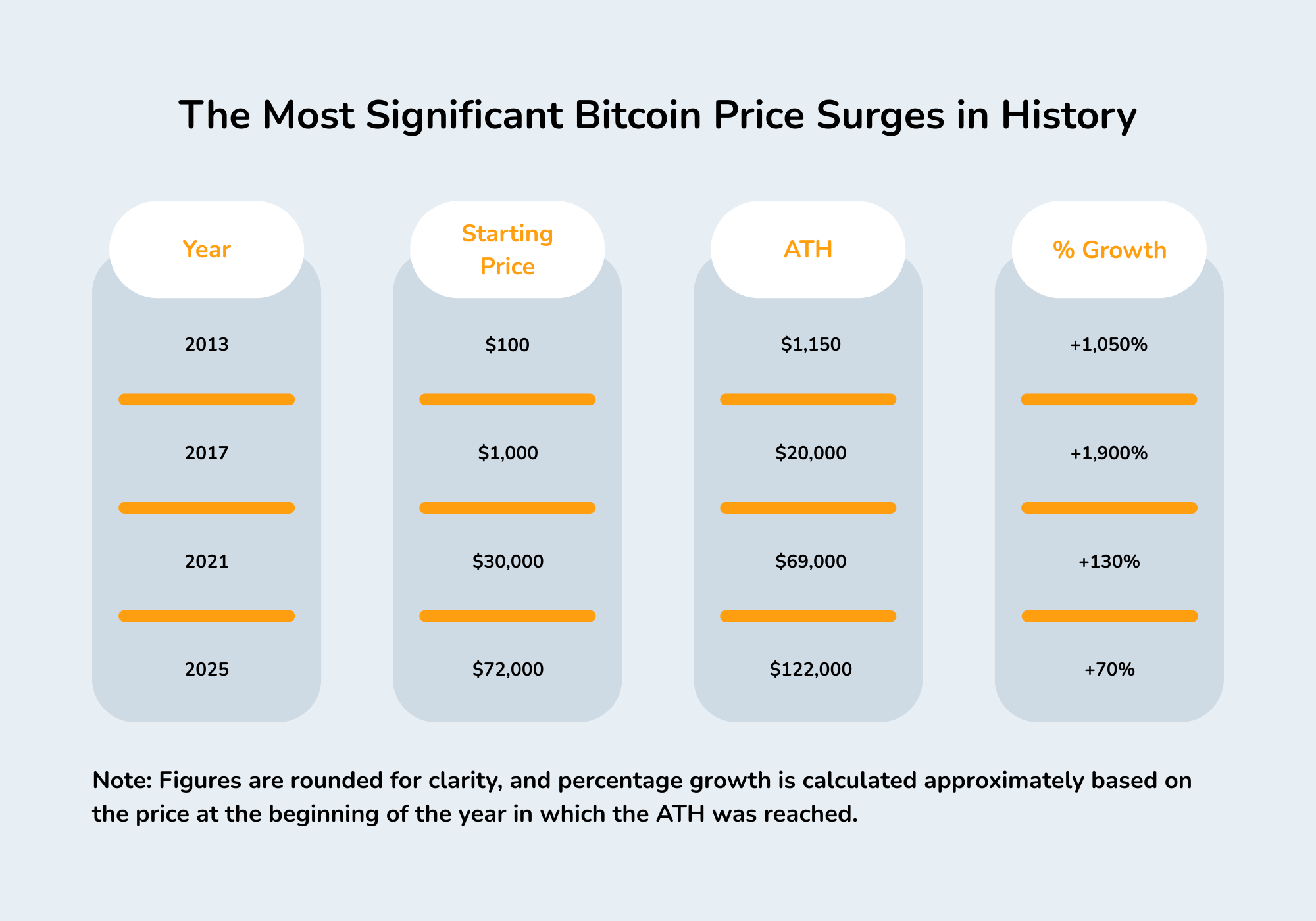
Bitcoin’s Biggest Price Surges in History
Throughout its history, Bitcoin has experienced numerous phases of growth and correction, but a few price surges stand out due to their scale and impact on the market.
Each of these rallies was driven by a combination of economic, technological, and social factors that captured the attention of the wider public and institutional investors.
2013 – The First Major Break Above $1,000
The year Bitcoin first gained global attention. The price jumped from around $100 to over $1,000.
2017 – Entry into the Mainstream (Up to $20,000)
In January 2017, Bitcoin was trading at approximately $1,000. Over the following 12 months, its value surged by nearly 2,000%, reaching a peak of $20,000 by year-end.
2021 – Institutional Momentum and a New ATH ($69,000)
At the start of 2021, Bitcoin was valued around $29,000 to $30,000. By November, it reached a new all-time high of approximately $69,000, marking a gain of over 130% in less than a year.
2025 – A New Peak ($122,000)
In early 2025, Bitcoin was trading at around $70,000 to $73,000. Over the first seven months of the year, the price steadily climbed, breaking $122,000 by mid-July — an increase of roughly 70% in a relatively short period.

The History of Bitcoin Growth: Key Factors That Shaped the Market
Bitcoin’s price growth is not random. Behind every major surge lies a series of concrete events and trends that create upward pressure on the demand side.
Below is an overview of the most influential factors that have defined past bull runs and how they impact the market:
1. Media Coverage and Social Media
Media outlets and platforms like Reddit, Twitter, and YouTube played a key role in 2013 and in every cycle since. When mainstream media starts reporting on Bitcoin’s rise, public interest increases, leading to a higher number of new investors. Positive headlines fuel FOMO (fear of missing out), pushing many to buy quickly so they don’t “miss the opportunity.”
2. Chinese Interest and Speculation
In the early phases of growth, especially in 2013, a large portion of trading volume came from China. Local exchanges and excitement around new technology created a highly speculative environment. Large volumes of buying in a short time led to a sharp price increase.
3. ICO Boom and Easier Access to Crypto
In 2017, the market exploded thanks to a wave of ICO (Initial Coin Offering) projects. People bought Bitcoin to participate in ICOs, which drove demand. In addition, more platforms made it easy to buy crypto with cards or mobile apps, making the market more accessible to the general public.
4. Institutional Investors and Legitimacy
The 2021 surge was marked by significant institutional entry. Companies like Tesla and MicroStrategy, along with funds like Grayscale, purchased large amounts of Bitcoin — sending a strong message that BTC is a serious asset class. These moves boosted trust among retail investors as well, showing Bitcoin was no longer a niche market, but part of the broader financial ecosystem.
5. Pandemic and Macroeconomic Uncertainty
The COVID-19 crisis and aggressive money printing (quantitative easing) reduced trust in fiat currencies. In that context, Bitcoin started to be viewed as a safe-haven asset and hedge against inflation — similar to gold. Many investors turned to Bitcoin as a way to preserve their capital.
6. ETFs and Regulatory Acceptance
A key moment in 2025 was the approval of Bitcoin ETFs in the U.S. This allowed institutional investors to gain exposure to Bitcoin without having to directly own it. ETFs bring a new level of liquidity, stability, and trust. When traditional financial giants like BlackRock and Fidelity enter the market, it signals to the public that Bitcoin has been “greenlit.”
7. Geopolitical Instability and Distrust in Fiat Currencies
Rising global conflicts, trade tensions, and declining trust in central banks have driven even more interest in alternative stores of value. As a decentralized currency not tied to any government or bank, Bitcoin has become an attractive option for those seeking financial sovereignty and capital protection.
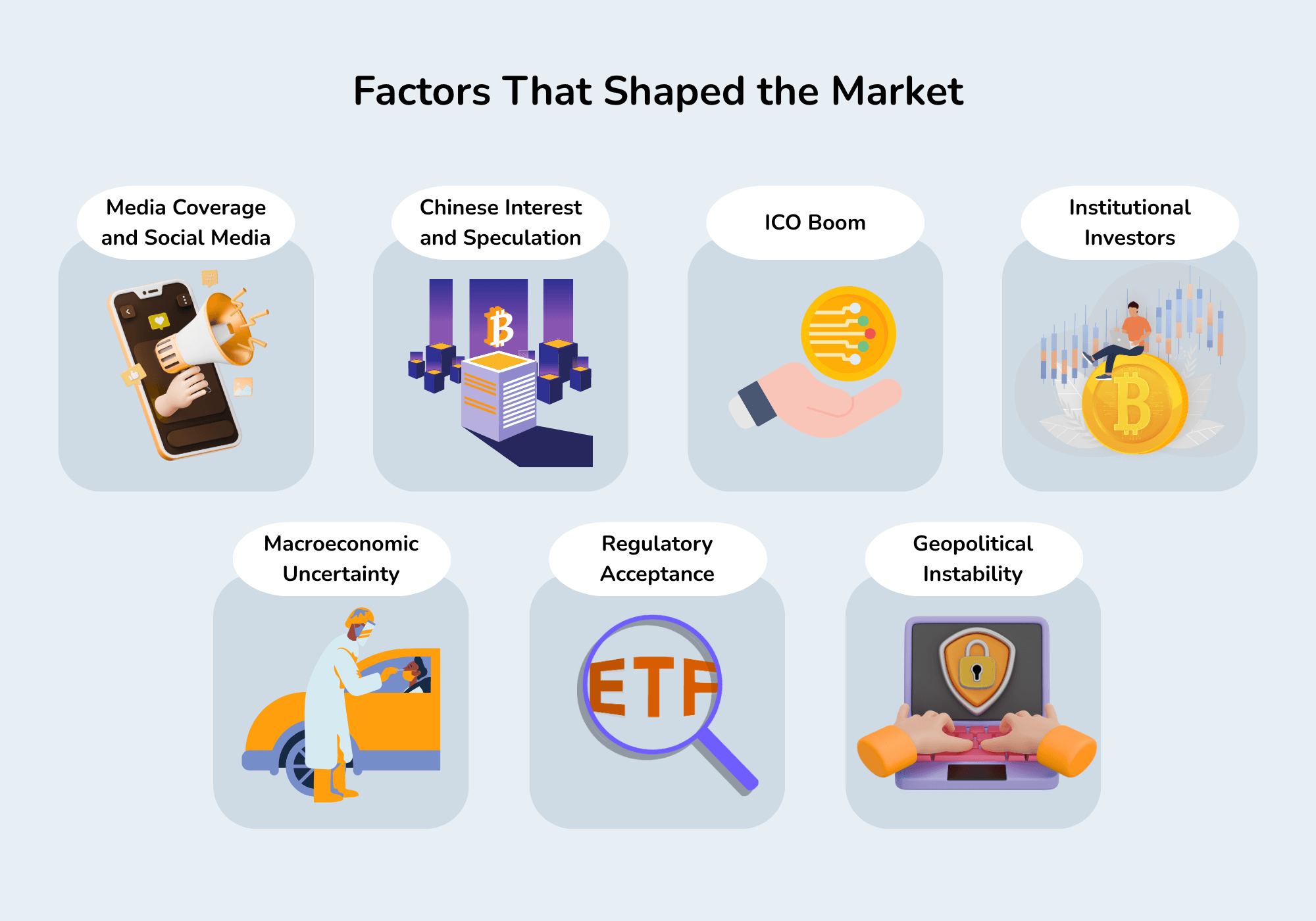
Each Bitcoin surge is the result of a broader context. Technological advancements, financial innovation, and global events often work together. Understanding these factors can help investors identify potential signals for future market movements.
When and How to Buy Bitcoin After It Hits a New All-Time High
Buying Bitcoin after it reaches a new all-time high (ATH) can feel intimidating, but having a clear plan helps avoid impulsive decisions.
The good news for those who haven’t entered the market yet: it’s never too late to start investing.
Some people wait for the price to drop during a bear market to begin buying. However, many long-term investors prefer using the dollar-cost averaging (DCA) method—investing smaller amounts regularly, such as 100 € every month, regardless of Bitcoin’s current price.
If you're ready to buy, it’s essential to use a reliable and easy-to-use platform. Bitcoin Store is one option that makes the process simple and efficient. Here's how it works:
- Create an Account – Sign up and complete the standard identity verification process.
- Deposit Funds – Add funds via bank transfer, credit card, or other available payment methods.
- Buy Bitcoin – Select Bitcoin, enter the amount you want to purchase, and confirm the transaction.
- Store Securely – Keep your Bitcoin in the Bitcoin Store Wallet or transfer it to a personal hardware wallet for long-term storage.
Sticking to a strategy and avoiding emotional reactions to market hype can make buying after an ATH far less stressful and much more thoughtful.
For more details, check out our full blog on how to buy cryptocurrencies.
Bitcoin Price – What to Expect Next?
Bitcoin has broken through $122,000, and this is no longer “just another rally.” More and more people are realizing that something deeper is changing — not just in price, but in how we think about money. Decentralization, transparency, and limited supply are becoming a real alternative to the traditional financial system.
Investors who have been HODLing are finally seeing the rewards of patience. Some are selling, others continue to hold, and new investors are entering the market with high expectations. Altcoins are rising, trading volume is climbing, and social media is buzzing with speculation and predictions.
Of course, hype also attracts the downside — scammers, emotional decisions, and uninformed investing. If you're new, make sure to do your own research (DYOR), use a trusted platform, activate 2FA, and never invest more than you can afford to lose.
Bitcoin may not replace fiat currencies, but it’s clearly opening the door to a new way of thinking about finance.
After a major price surge like this, the market naturally enters a phase of uncertainty. It could go higher, but a short pause or correction is also likely. Many are watching to see whether $130,000 will be the next psychological milestone — but the path won’t be a straight line.
As the next Bitcoin halving approaches, history suggests it could drive further growth. However, regulatory developments — especially in the U.S. and EU — will also play a key role in shaping institutional confidence and wider adoption.
The market may be on an upward trend, but caution and education remain essential. Investing in crypto isn’t about timing the market — it’s about understanding the bigger picture.


