How Football Embraced the Crypto Hype

Football is increasingly embracing crypto — from Bitcoin bonuses to partnerships with blockchain platforms and fan tokens. Clubs and players are exploring new ways to fund operations and connect with fans through digital currencies and Web3 technology.
Table of contents:
Football jerseys were once dominated by logos of banks, airlines, and telecom giants. Today, they’re increasingly replaced by the names of cryptocurrencies, blockchain projects, and meme coins. The world of football — known for its global reach and emotional power — has become the perfect stage for spreading the crypto hype.
Meme Coins and Football – When a Joke Turns into a Million-Dollar Business
The rise of meme coins such as Dogecoin, Shiba Inu, and newer projects like Pepe or Floki shows how quickly fun and internet culture can turn into serious capital.
Football fans, known for their passion and sense of community, have become a natural audience for this phenomenon. In the past two years, we’ve seen:
- Floki Inu featured on LED screens during Premier League matches,
- Baby Doge appearing in sponsorship campaigns with football clubs,
- and even individual players publicly promoting their favorite meme coins.
For clubs, these projects represented a new source of revenue, and for the coins, global exposure. While many of these tokens have more marketing value than real utility, their impact on popularizing crypto in sports cannot be ignored.
Crypto Sponsorships: A New Source of Power in Sports
At a time when football clubs are fighting for every possible financial advantage, crypto companies have emerged as powerful new players.
Examples include Crypto.com, which became a global partner of FIFA and a sponsor of the World Cup in Qatar; Binance, which sponsored clubs such as Lazio and Porto; and Socios.com, which allows fans to use fan tokens to vote on certain club decisions and access exclusive benefits.
Other notable examples include partnerships between Tottenham Hotspur and Kraken, as well as Juventus and Tether, both highlighting how deeply crypto is becoming intertwined with the business of football.
Crypto on the Pitch: Tottenham Hotspur and Kraken
In July 2024, Tottenham Hotspur announced a global partnership with the crypto platform Kraken. With this deal, the club became the first to appoint an official Crypto and Web3 Partner, featuring the Kraken logo on the sleeves of both the men’s and women’s team kits.
Both sides emphasized their shared vision of a future where technology and innovation enhance the fan experience — from digital content to new ways of engaging the community through blockchain and Web3 tools.
How and When Tether and Juventus Formed Their Partnership
As reported by Finance Magnates, in February 2025 Tether, the issuer of the world’s most popular stablecoin USDT, officially announced that it had become a minority shareholder in the Italian football club Juventus. In the first phase, Tether purchased a portion of shares available on the market, securing an initial ownership stake in the Turin-based club.
A few months later, in April 2025, the company further increased its stake, surpassing the 10% ownership threshold, which made Tether the second-largest shareholder in Juventus, right behind the holding company Exor, which continues to hold the majority stake.
With this move, Tether strengthened its presence in the sports world and announced plans for a more active role in the club’s management structure, including the potential to propose new board members.
The partnership symbolizes the growing connection between cryptocurrencies and professional football, particularly in areas such as club financing and innovation within the sports industry.
For the crypto industry, this marked a way to reach a mainstream audience; for the clubs, it meant multi-million-dollar deals and a modern image of an innovative brand.
Football and Cryptocurrencies: From an Idea to Real Transfers and Partnerships
Although the idea of buying a player “with Bitcoin” once sounded like pure sensation, today it’s no longer impossible.
There are already examples of clubs receiving partial payments in cryptocurrencies, agents and players being paid bonuses or salaries in stablecoins, and even a few transfers — especially among smaller clubs and lower leagues — carried out through blockchain technology.
Below are several examples of clubs and athletes who have used or experimented with cryptocurrencies, crypto-based bonuses, or partial payments in digital assets.


Lionel Messi and PSG Brought Cryptocurrencies into the World of Transfers
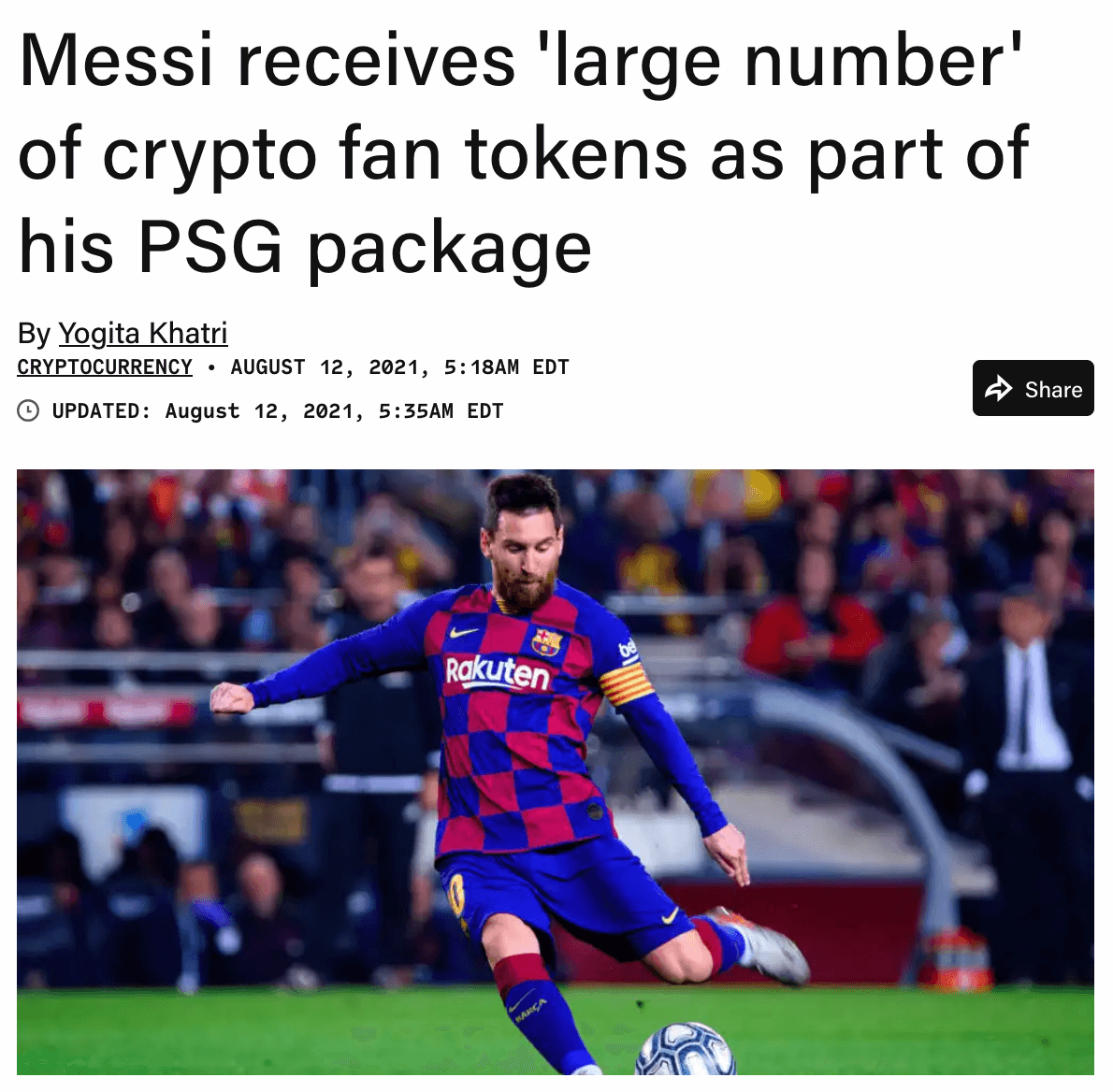
When Lionel Messi joined PSG in 2021, part of his signing bonus was paid in PSG fan tokens through the Socios.com platform.
These tokens allow fans to participate in certain club decisions, access exclusive content, and earn rewards. According to reports, the agreement included a “significant number” of PSG tokens, making Messi the first footballer to receive a bonus in crypto tokens.

Southampton FC (English Premier League) and Bitcoin Bonuses
In 2021, English Premier League club Southampton signed a three-year deal with Coingaming Group, allowing the club to pay player performance bonuses in Bitcoin.
Through this partnership, Southampton players were given the option to receive their annual performance bonuses in Bitcoin — marking the largest sponsorship deal in the club’s history.
According to the business and finance outlet City AM, all 24 players on the team could choose to have their bonuses paid in BTC. As the Premier League is one of the wealthiest football leagues in the world, this option to receive high-value payments in Bitcoin was seen as a strong signal of support for the cryptocurrency.
Cryptocurrencies enable faster and cheaper international transactions, a particularly appealing advantage in a world where millions of euros often move across different tax jurisdictions.
A Shared Passion for a Global Audience
Football and cryptocurrencies share key traits: a global reach, a strong community, and an emotional connection with their audiences.
Crypto projects use football as a way to reach millions of fans worldwide, while clubs see crypto as an opportunity for innovation, digitalization, and new revenue streams.
Even if the hype around meme coins doesn’t last forever, the link between football and blockchain has already become part of the modern sports industry — and it’s likely to play an important role in its future.


