Inflation, Deflation and Bitcoin – Simply Explained
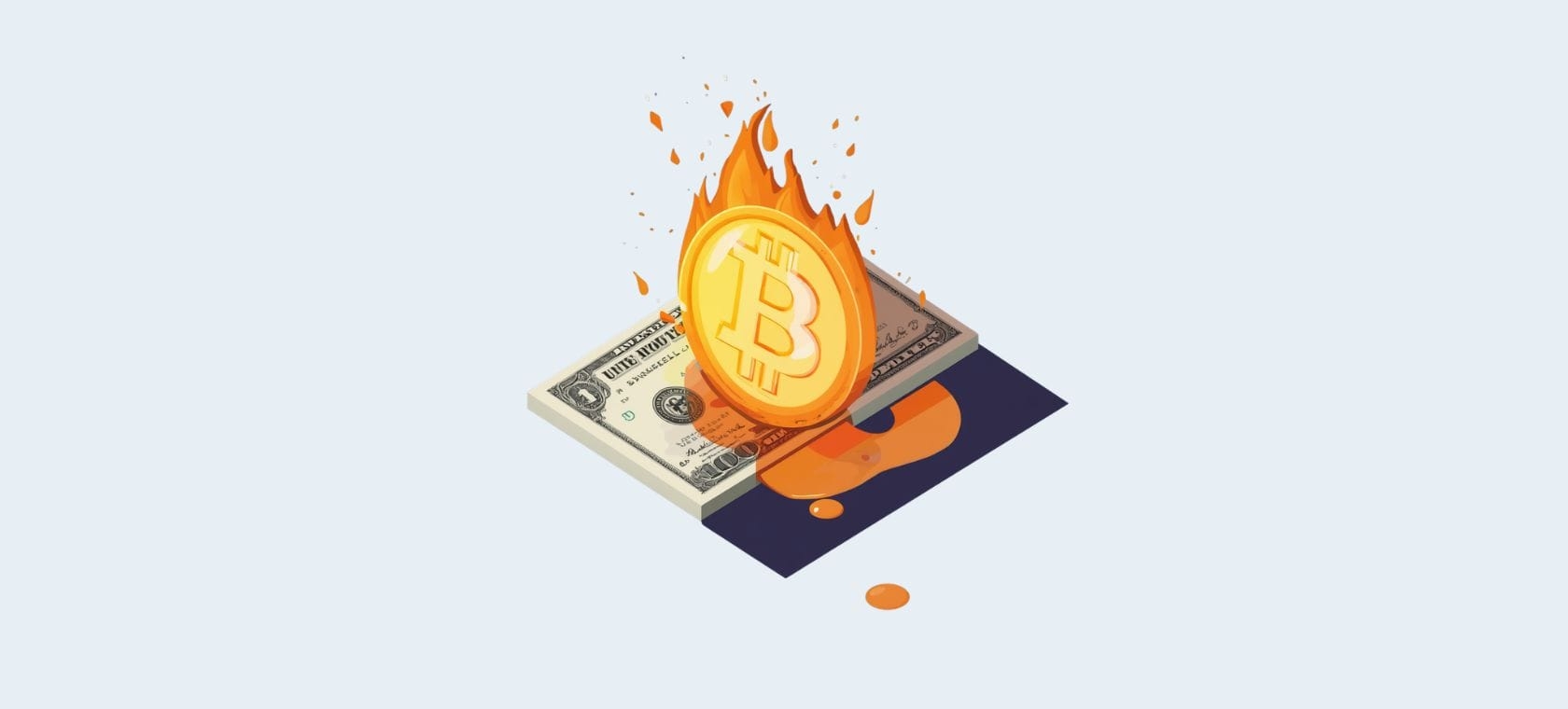
What is inflation? Why isn't deflation the answer? And how is Bitcoin changing the rules? Everything you need to know — explained without the economic jargon.
Table of contents:
Have you ever gone to the store and been surprised by the price of bread or coffee? Or do you remember how your €50 pocket money used to go a lot further than it does today? That's not a coincidence — that's inflation at work.
But what exactly does inflation mean? And what is deflation? And where does Bitcoin fit in? Let's break it all down — no economics degree required.
What is inflation?
Inflation is the gradual decline of money's purchasing power — a situation where the same amount of money buys you less and less goods and services over time.
Simply put: things get more expensive, and money gets "weaker."
Real life example: If a coffee at a café cost around €0.93 in 2015, and today it costs €1.80, that means your money has lost value.
Why does inflation happen?
- the central bank "prints" more money than the economy actually grows
- demand for goods rises faster than those goods can be produced
- import prices rise (e.g. energy, raw materials), making everything more expensive
- governments borrow and spend more than they earn in revenue
A little inflation (around 2% per year) is considered healthy by economists. It encourages people to spend and invest rather than keep cash under the mattress. The problem arises when inflation spirals out of control and hyperinflation occurs.
What is deflation?
Deflation is the opposite of inflation. It's a situation where prices fall and money becomes worth more and more. Sounds great, right? Well, not quite.
Example: If you know that a car that costs €20,000 today will cost €18,000 in a year, why would you buy it now? And when everyone starts postponing their purchases, companies sell less, lay off workers, the economy slows down... and a spiral begins.
Why is deflation dangerous?
- consumers postpone purchases — waiting for lower prices
- companies see reduced revenue and cut costs, resulting in layoffs
- debts become "heavier" because you repay them with more valuable money
- it can turn into a recession or depression
Japan experienced the "deflationary decade" of the 1990s firsthand. The economy was almost frozen for years. Central banks are very afraid of deflation and prefer to tolerate moderate inflation.
Where does Bitcoin fit in?
Bitcoin was designed as a direct response to the problems of fiat money. Satoshi Nakamoto, the anonymous creator of Bitcoin, did not create this currency in the middle of the 2008 financial crisis by coincidence.
Bitcoin has a fixed supply
There will never be more than 21 million bitcoins. These rules are engraved in the code and cannot be changed by any government or central bank. Unlike the euro or the dollar, Bitcoin cannot be "printed" at will.
A deflationary currency by design
Every 4 years, a "halving" occurs — the amount of new bitcoins entering circulation is cut in half. This means Bitcoin is structurally deflationary — over time it becomes scarcer and (with growing demand) more valuable. Unlike fiat currencies that lose value through inflation, Bitcoin is programmed to preserve it.
Is Bitcoin a hedge against inflation?
This is one of the most important questions for investors. In theory yes — the limited supply makes Bitcoin resistant to inflationary erosion of value. In practice, Bitcoin's price is highly volatile in the short term, but long-term trends show a strong upward trajectory despite the dips.
- in countries with hyperinflation (Argentina, Venezuela, Turkey) Bitcoin has grown as a store of value
- a growing number of institutional investors (funds, companies) hold Bitcoin as "digital gold"
- every halving has been followed by a significant price increase
What does this mean for you?
Inflation is slowly eating away at the value of the money sitting in your account. This isn't a conspiracy theory — it's the mathematics of monetary policy.
Average inflation in Europe in recent years has been higher than savings returns, which means you were practically losing purchasing power simply by "saving."
Bitcoin doesn't offer a magic solution and it's not without risk. The price can fall and rise dramatically in the short term. But as a long-term asset with a limited supply, many see it as one of the few options that can resist the inflationary erosion of value.
You don't have to choose between inflation and deflation — you can start exploring alternatives. And Bitcoin is one of them. Do your research, start slowly, and only invest what you can afford to lose.
Disclaimer: Bitcoin Store is not a financial advisory company and is not authorized to offer investment or financial advice. Opinions, analyses and other content on our website are for informational purposes only and should not be considered as a basis for making investment decisions. Trading cryptocurrencies involves speculation, and prices can fluctuate rapidly, potentially resulting in the loss of your investment. Before investing in cryptocurrencies, always seek independent advice and thoroughly understand the risks associated with this type of financial instrument.


