What is Cryptocurrency Mining, and is it Still Possible Today?
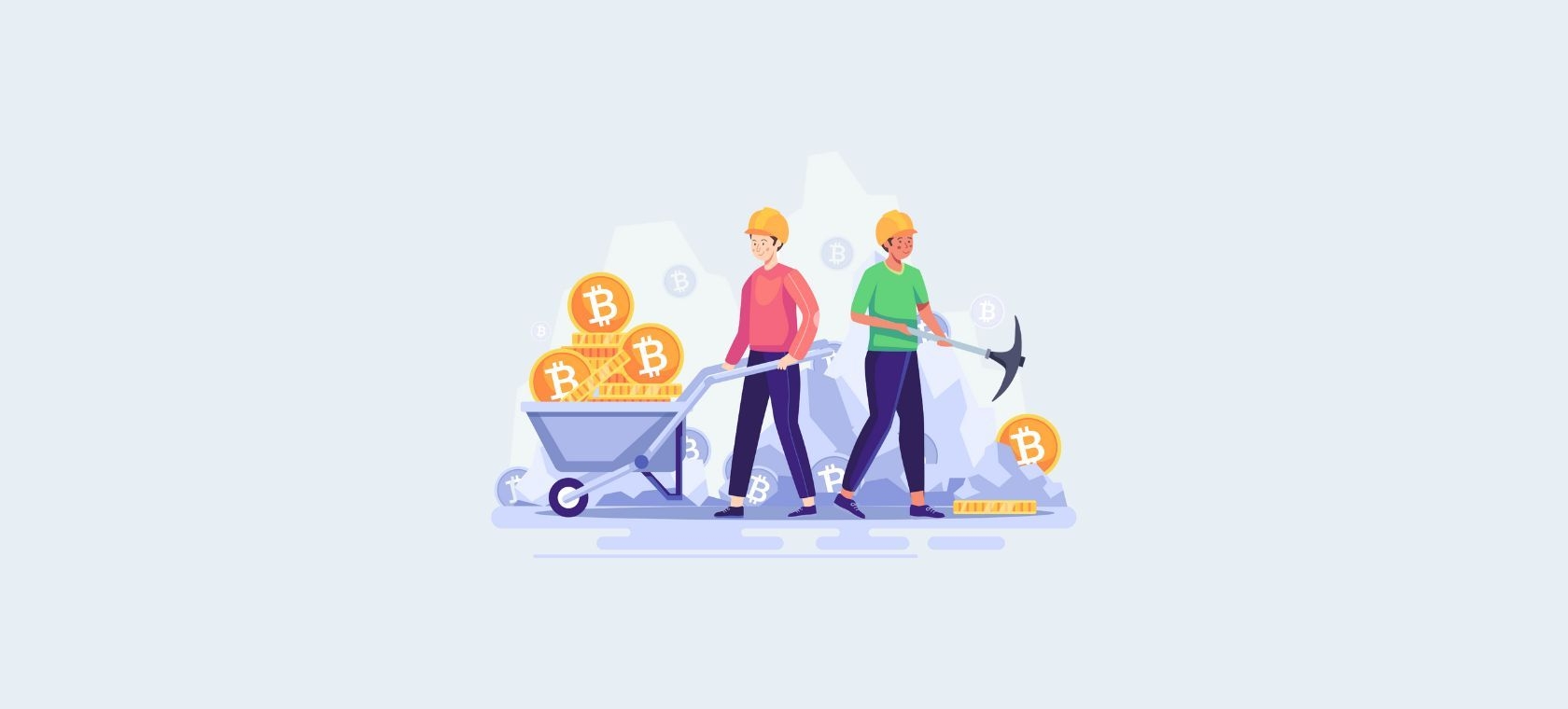
Crypto mining: a dream of easy riches or a costly corporate business? From Bitcoin on a PC, through ASIC farms, to Ethereum's shift to PoS - we'll give you the full timeline. Find out why mining is so difficult now, how staking works, and what's truly behind the Pi Network frenzy.
Table of contents:
Imagine yourself back in 2009. You boot up your old home computer and run a simple piece of software. A few hours later, you've earned 50 Bitcoins.
That wasn't a fantasy; it was the daily reality for the pioneers who first ignited the "digital gold rush". Back then, cryptocurrency mining was a simple hobby, accessible to anyone curious about the crypto concept.
Today, the picture is drastically different. Mining has grown into a multi-billion dollar industry dominated by massive farms nestled near hydroelectric dams, effectively squeezing the "average person" out of the game.
But is that really the whole story?
This post will take you on a journey through the history of crypto mining—from Bitcoin’s earliest days, through energy crises and technological evolution, all the way to the major turning point (Ethereum) and controversial projects like the Pi Network.
Most importantly, we'll give you an honest answer to the key question: Is cryptocurrency mining even possible and profitable today?
The Digital Gold Rush: How It All Began
The core of cryptocurrencies is decentralization: a system that doesn't need banks or governments. For such a system to work, there has to be a way to validate transactions and prevent fraud. That's where mining steps in.
The Birth of Bitcoin and Proof-of-Work (PoW)
In 2008, under the pseudonym Satoshi Nakamoto, Bitcoin was introduced, along with its fundamental consensus mechanism: Proof-of-Work (PoW).
PoW is an ingenious fix for the "double-spending" problem, and it works like this:
- The math problem: Miners (computers) race to solve a complex cryptographic puzzle (finding a specific hash).
- The energy cost: Solving this requires enormous computing power and electricity—this is the "work" being proven.
- The reward: The first miner to crack the puzzle adds a new transaction block to the blockchain and gets rewarded with new Bitcoins (the block reward) and transaction fees.
In the first few years, this was open to everyone. A basic CPU (processor) was enough because the mining difficulty was incredibly low.
Hardware Evolution: From GPUs to ASICs
As Bitcoin's popularity surged, so did the difficulty of the mathematical problems. People quickly realized that Graphics Processing Units (GPUs) were far more efficient at parallel calculations than standard CPUs.
→ The GPU era: This was the period when thousands of enthusiasts started filling their spare rooms with graphics cards (NVIDIA, AMD) to mine Bitcoin and later altcoins like Ethereum.
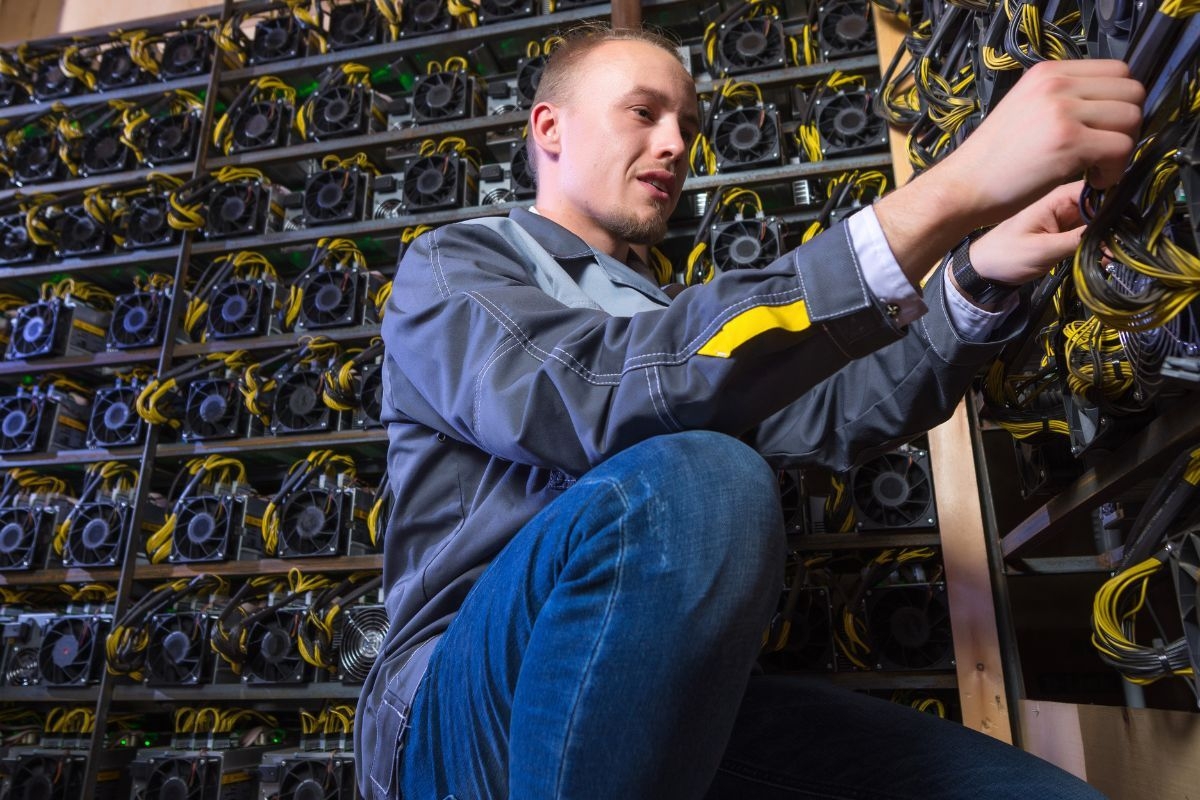
→ The arrival of ASICs (2013 onwards): Application-Specific Integrated Circuits. ASICs are specialized machines created solely for one task - mining Bitcoin. Their power is unmatched by any GPU. With their debut, individual Bitcoin mining using a GPU became practically impossible and unprofitable.

The Turning Point: From Miners to Stakers (PoW vs. PoS)
Beyond ASICs, the biggest problem with PoW mining became its massive energy consumption. Bitcoin's network began using more electricity than some entire countries.
This controversy fueled the creation of a new consensus mechanism that eventually gained dominance - Proof-of-Stake (PoS).
Proof-of-Stake (PoS) – Staking Replaces Mining
- What is PoS? PoS doesn't rely on computational power (energy) but on an economic stake. Instead of racing to solve a puzzle, users who want to validate transactions must lock up (stake) a certain amount of the cryptocurrency.
- The validator's role: The network randomly selects validators (users who have staked their coins) to create a new block. If a validator breaks the rules, they can be penalized by losing their stake (slashing).
- Advantages: PoS is incredibly energy-efficient (consuming up to 99% less power than PoW), faster, and has a lower barrier to entry (no need for expensive hardware).
Ethereum's The Merge and the End of the GPU Era
A crucial moment in mining history happened in September 2022 (though it was planned for years). Ethereum (ETH), the second-largest cryptocurrency and the primary target for GPU miners globally, switched its mechanism from PoW to PoS - an event known as The Merge.
This single move effectively stopped GPU mining of Ethereum overnight.
Thousands of GPUs flooded the market, and miners pivoted to smaller, remaining PoW altcoins (like Ravencoin, Ergo, and others), but the profit margins were nowhere near what ETH had offered.
What Cryptocurrency Mining Looks Like Today
In the wake of The Merge and amidst the global energy crisis and inflation, cryptocurrency mining has become extraordinarily challenging.
Bitcoin Mining
If you're asking about Bitcoin mining, it is now possible exclusively with the newest and most expensive ASIC machines.
Individual, home-based mining is practically unprofitable. The electricity cost required for household mining is rarely covered by the reward.
The market is dominated by corporations that build massive farms in regions with the cheapest electricity (e.g., Iceland, parts of the US with surplus hydro-energy) and hold power purchasing agreements with utility companies.
In short, for the average user, Bitcoin mining is a closed chapter.
Altcoin Mining
GPU altcoin mining still exists, but it is risky and barely profitable. Many remaining PoW altcoins have a small market capitalization, which means high price volatility.
Investing in expensive hardware to mine altcoins whose price could collapse at any moment is a major gamble.
For most people, it's far more profitable to buy and stake PoS cryptocurrencies (like Ethereum, Solana, Cardano) and earn validation rewards than to try and win the PoW race.
Pi Cryptocurrency and Mobile Phone "Mining"
While the world of Bitcoin mining required thousands of dollars in ASIC hardware, the global pandemic that started in March 2020 confined people to their homes.
Absolute boredom, economic uncertainty, and the search for passive income created the perfect storm for the rise of projects like the Pi Network.
What Exactly Is the Pi Network?
The Pi coin was launched with the ambition of becoming the world's most accessible cryptocurrency. It attracted millions of users with a simple app that "mines" tokens by clicking a button once a day.
Crucially, Pi does not use PoW. Your mobile phone is not solving complex problems or draining your battery. You earn Pi tokens by confirming you aren't a bot and by expanding the network (inviting new users). This is fundamentally a token distribution mechanism aimed at building a massive user base, rather than true mining.
Why Did Pi Explode During the Pandemic?
- Accessibility and Zero Risk: During a time of economic uncertainty, Pi promised "free" tokens with zero investment or financial risk. All you needed was to tap a button once a day. People were desperate for a way to earn from home.
- Viral Marketing Model (Referrals): Pi was intentionally designed to grow based on referrals. Miners were rewarded with a faster mining rate if they invited friends and family. People stuck at home mass-shared codes, making it extremely viral.
- FOMO (Fear of Missing Out): The constant reduction in the "mining" rate as the network grew pushed new users to join quickly, creating the feeling that they would miss out on free digital wealth before the project hit exchanges.
- The Promise of a "New Crypto for the People": Pi positioned itself as the antithesis to the expensive and energy-hungry Bitcoin and Ethereum networks, attracting millions of beginners who wanted to feel like pioneers without technical knowledge or capital.
What Is the Current Status of Pi Network?
Although the project accumulated a massive user base, for years it remained in the Enclosed Mainnet phase, meaning there was no possibility of trading on major exchanges.
In 2025, the Pi Network officially launched its Mainnet. While this was a key moment, the initial market price of the token is extremely low and volatile (often hovering around $0.20 – $0.40).
While Pi enabled mobile distribution, it did not revive classic mining.
Is it profitable? That remains to be seen, but for now, it lags far behind cryptocurrencies with proven market value.
Is Classic Mining Still Possible Today After All?
Let's return to the key question: Is cryptocurrency mining still possible today?
The answer is YES, but for the vast majority of people, mining has been replaced by investing.
→ Bitcoin PoW (ASIC): Only feasible for industrial players with access to very cheap energy and capital for expensive machinery. For us at home: NO.
→ Altcoin PoW (GPU): Technically possible, but often unprofitable due to the low prices of remaining PoW altcoins and high electricity costs.
→ Proof-of-Stake (Staking): This is the modern equivalent of mining. Instead of buying hardware, you buy the cryptocurrency and "lock it up" to receive rewards. It is energy-efficient, accessible to everyone, and by far the most practical path to earning rewards for block creation in today's crypto world.