What is Sharding in Crypto: A Beginner's Guide
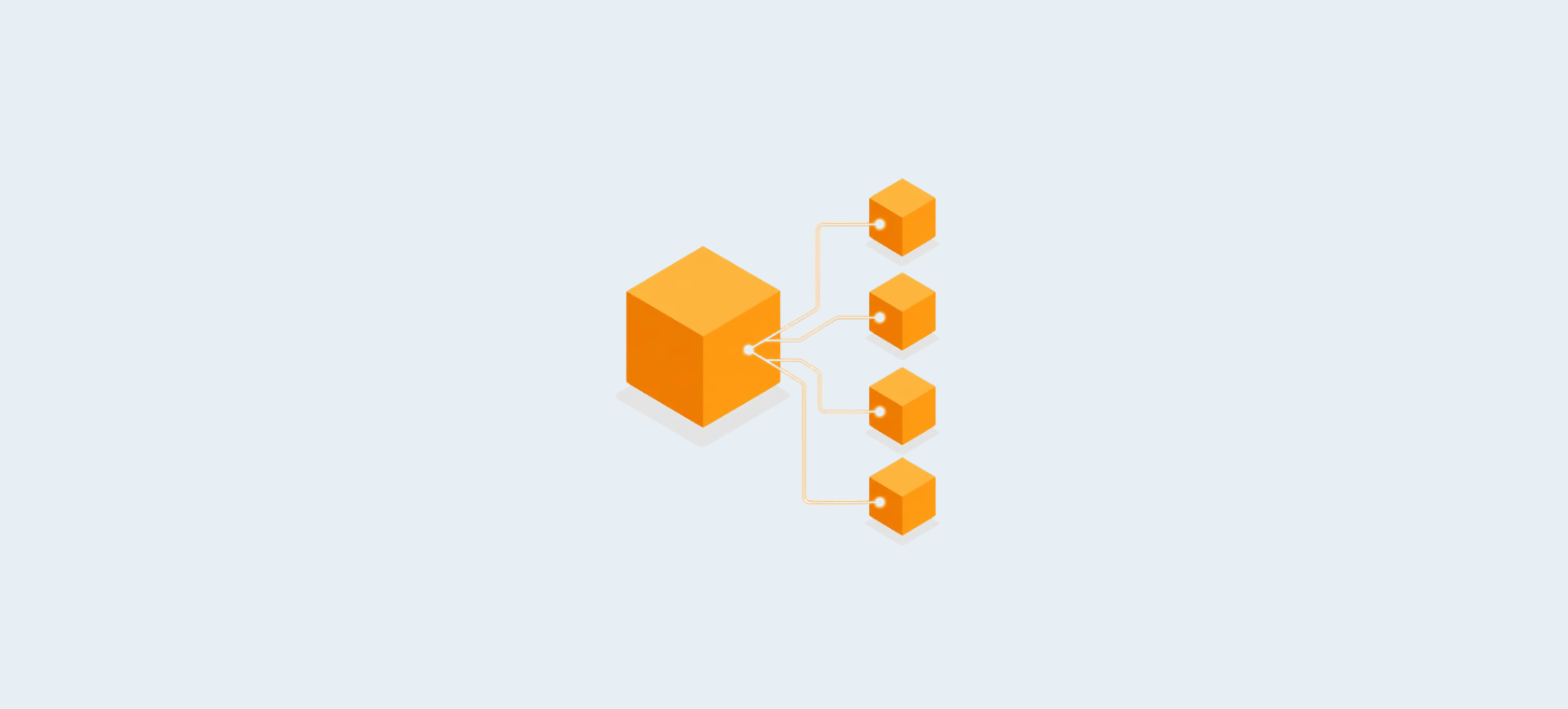
Sharding solves blockchain's scalability problem by splitting the network into smaller parts that process transactions in parallel. We explain how it works, why it matters, and the benefits and challenges it brings.
Table of contents:
If you've been navigating the world of cryptocurrency for a while, you've probably come across the term "sharding", often mentioned when discussing the future of Ethereum or how to solve the problem of blockchain scalability.
It may sound daunting, but at its core, it's a very simple idea. In this blog, we explain what sharding means, how it works, and why it matters for the future of blockchain technology.
The problem sharding solves: scalability
To understand sharding, we first need to understand the problem it solves.
A traditional blockchain works by having every node in the network process and store every transaction that occurs on the network.
This means the entire network operates like one enormous office, where every clerk has to review every document, no matter how many there are.
When a network has few users, this isn't a problem. But as the number of users and transactions grows, the network becomes slower and more expensive to use.
This is known as the scalability problem, and it's exactly what sharding aims to solve.
What is sharding?
Imagine a huge library with millions of books. If just one librarian had to find, check and shelve every single book, the system would be incredibly slow.
But if we divide the library into several departments, each with its own librarian responsible only for their section, the work happens in parallel and much faster.
Sharding works on the same principle.
The word "shard" means "a fragment" or "a small piece", and sharding is the process of dividing a blockchain network into smaller, independent parts called shards.
Each shard processes its own set of transactions and data, in parallel with the other shards, instead of the entire network processing all transactions together.
How sharding works in practice
Here's a simplified overview of the mechanism:
1. Dividing the network into shards
The blockchain network is divided into several smaller segments (shards). Each shard contains its own subset of nodes, transactions and, in some cases, its own state of the network.
2. Parallel processing
Instead of every node processing every transaction on the entire network, nodes within a given shard only process transactions assigned to that shard. This means hundreds or thousands of transactions can be processed simultaneously, rather than one after another.
3. Communication between shards
Shards aren't completely isolated; they need to be able to communicate so the network remains unified and secure. This is one of the most technically demanding parts of a sharding system, as transactions involving multiple shards (for example, transferring funds from one shard to another) require carefully designed coordination mechanisms.
4. System security
To prevent an attack on a single smaller shard from easily compromising funds, the system's design must ensure that each shard remains sufficiently decentralised and secure, often through random distribution of validators across shards.
Why sharding matters: the Ethereum example
Sharding is one of the key elements of Ethereum's long-term scalability roadmap.
The idea is that, instead of processing all transactions on a single chain, the load is distributed across multiple parallel shards, which would significantly increase the number of transactions the network can process per second (TPS), while at the same time reducing transaction costs (gas fees).
Over time, the approach has evolved, from the original plans for "execution sharding" (where shards would execute smart contracts) to a concept known as "danksharding", which is primarily focused on increasing data availability to support Layer 2 solutions, such as rollups.
Advantages of sharding
- Greater network throughput: parallel processing enables a significantly higher number of transactions to be processed within the same timeframe.
- Lower transaction costs: when the network load is distributed across multiple shards, competition for block space and high fees are reduced.
- Better scalability without centralisation: unlike the simple solution of "just increasing block size", sharding allows the network to grow without drastically increasing hardware requirements for individual nodes, which helps preserve decentralisation.
Challenges and drawbacks
Sharding isn't a simple solution without trade-offs:
- Security complexity: smaller shards can be an easier target for attack if they aren't sufficiently decentralised, requiring careful distribution of validators.
- Complexity of inter-shard communication: transactions that cross shard boundaries require sophisticated protocols to ensure data consistency.
- Technical complexity of implementation: sharding is one of the most technically demanding undertakings in blockchain protocol development, which is why its implementation often takes years.
Sharding and the future of scalability
The blockchain industry has faced the same question for years: how to enable a network to grow without losing what makes it valuable, decentralisation and security.
Sharding isn't the only attempt to answer that question, but it's one of the most ambitious, as it tackles the problem at the level of the network's architecture itself, rather than through temporary patches.
That's why it's worth keeping an eye on.
As solutions like danksharding are developed and implemented, transactions that can currently be slow or expensive during periods of high demand may, over time, become faster and more accessible.


